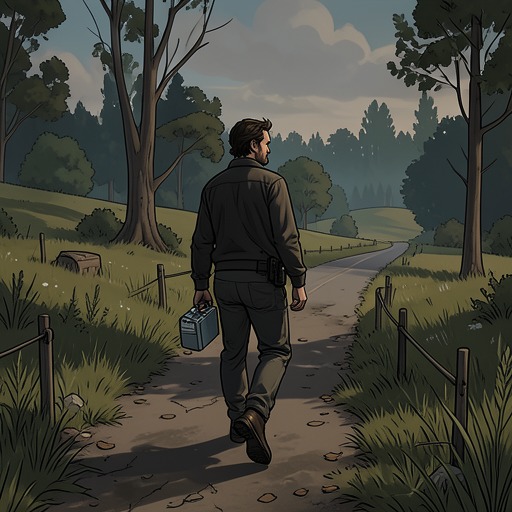
David Hunter—Alice
The Chemistry of DeathDavid Hunter’s relationship with his daughter Alice continues after her death as an intimate presence in his grief, even as he slowly becomes able to imagine a future without her.
Loss and Continuing Presence
After the accident that killed Alice and Kara, David remained deeply attached to their memory. In one disturbing dream, he felt both of them present and believed Kara was trying to warn him, though he was afraid to learn what the warning might be. He woke in the kitchen, confused about how he had got there, with the dream still on his mind. The episode shows how his family’s loss remains active in his inner life: Alice is not simply part of the past, but part of the emotional bond through which David experiences his bereavement.
Grief and the Possibility of a Future
David’s bond with Alice remains part of how he explains his life after the family’s loss. When he tells Jenny about his history with Kara and Alice, Jenny listens and briefly touches his hand. Her quiet response gives David room to share that past without turning the conversation into a demand that he move on; the two then continue talking about other things.
Later, David recognizes a change in his relation to that loss. Thinking of Alice and Kara, he finds no sense that caring for Jenny would betray them. The pain of their absence remains, but he accepts that they are dead and cannot be brought back. For a long time, he had felt dead himself; now he can look toward a future and feels newly alive. His continuing attachment to Alice is therefore not erased by the possibility of another relationship: grief remains, but it no longer bars him from imagining life ahead.
Memory Without Reunion
The relationship is presented entirely through David’s memory and grief rather than through any present-day exchange: Alice is part of the family past he carries into his developing life with Jenny. The narrative’s emphasis on his acceptance of her death preserves the bond without suggesting that memory can undo the loss.
From Involuntary Memory to Deliberate Reckoning
The narrative first brings Alice back through a dream David cannot control; later, he deliberately considers what his continuing love for her means as he looks toward the future. That movement—from an unsettling return of the lost family to a conscious reckoning with absence—shows a bond altered by bereavement but not severed. Alice remains part of David’s inner life, while the story gives no suggestion that remembering her requires him to remain fixed in the past.